


Keep the DigitalOcean infrastructure you already know and use OnePloy as the application deployment layer above it. Connect a compatible Droplet, then deploy supported web apps, APIs, automation, AI agents, databases, and services without turning routine application operations into a collection of SSH notes and manual server steps. DigitalOcean remains your infrastructure provider; OnePloy gives you a consistent workflow for what you run on the server.
OnePloy platform pricing starts at $4.99/month. Your DigitalOcean Droplet, volumes, backups, bandwidth, snapshots, and other DigitalOcean services continue to be billed by DigitalOcean.
Use OnePloy as the deployment layer for a compatible VPS you already pay for. Your infrastructure provider remains separate.
OnePloy starts at $4.99/month. Cloud-provider infrastructure, model-provider usage, domains, and third-party services are billed separately when applicable.
SIMPLE MONTHLY RATERun AI agents and automation on connected infrastructure while keeping deployment controls in OnePloy.
OnePloy starts at $4.99/month. Cloud-provider infrastructure, model-provider usage, domains, and third-party services are billed separately when applicable.
SIMPLE MONTHLY RATEDeploy stateful services on infrastructure you control and keep app-to-database deployment organized in one place.
OnePloy starts at $4.99/month. Cloud-provider infrastructure, model-provider usage, domains, and third-party services are billed separately when applicable.
SIMPLE MONTHLY RATEDigitalOcean describes Droplets as Linux-based virtual machines. That makes them a flexible foundation for websites, APIs, workers, automation, databases, and custom services—but the application layer still needs to be installed, configured, exposed through a domain, secured, monitored, and kept organized as more workloads are added. OnePloy is designed to sit above that infrastructure. You choose the Droplet size, image, region, network configuration, backup policy, and account settings in DigitalOcean. After the server is connected, OnePloy provides a consistent deployment workflow for supported applications and services. This keeps infrastructure ownership with DigitalOcean while reducing the repetitive application-management work that usually grows around a general-purpose VPS.
Use DigitalOcean for the VM and infrastructure controls you want. Use OnePloy for the application lifecycle you repeat: deploying services, connecting domains, configuring environments, organizing persistent workloads, and running the apps your team actually uses.
Keep your existing DigitalOcean account and Droplet
Deploy supported apps, agents, automation, and databases
Use domains, SSL workflows, environment variables, and logs
Scale by resizing the Droplet or connecting additional servers

DigitalOcean lets you select Linux images, server sizes, regions, networking, SSH authentication, backups, and other infrastructure options. OnePloy focuses on what happens after the server exists: turning that compute into a repeatable application environment.

Use the same connected Droplet for compatible workloads such as WordPress, Next.js, Node.js, n8n, OpenClaw, PostgreSQL, Redis, Strapi, and other OnePloy applications—subject to the CPU, memory, storage, network, and security requirements of the services you choose.
View Pricing View Pricing
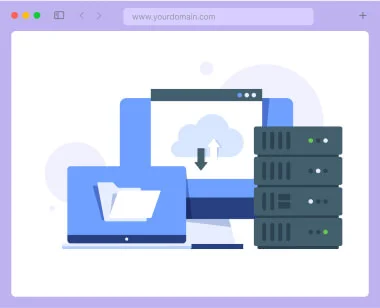
DigitalOcean remains responsible for the underlying cloud VM. OnePloy provides a higher-level application deployment and operations workflow for supported workloads.
Keep infrastructure ownership, billing, region selection, account security, and provider-level controls in your DigitalOcean account.
Use the OnePloy application catalog and deployment workflow instead of manually reproducing installation steps for every service.
Connect application domains and manage the deployment-side HTTPS workflow without treating DNS and reverse-proxy setup as a new project each time.
Keep application environment variables and runtime configuration organized outside the codebase and easier to change per deployment.
Use a consistent operational view for supported workloads instead of remembering a different process for every service installed on the VPS.
Run compatible databases and persistent applications with storage requirements planned around the capacity of the Droplet and attached storage.
Deploy n8n, agent workloads, and applications that use OnePloy AI Gateway on the same infrastructure pattern.
Resize or replace the underlying DigitalOcean infrastructure as workloads grow, then keep the deployment layer consistent in OnePloy.
These are representative use cases, not customer endorsements or verified reviews.
A small product runs its Next.js frontend, Node.js API, PostgreSQL database, and Redis service on a connected Droplet while OnePloy keeps the application deployments organized.
A team keeps DigitalOcean as the VPS provider and uses OnePloy to run n8n, webhook endpoints, supporting databases, and AI-connected workflows.
An agency standardizes the application layer across several client Droplets so WordPress and Node.js deployments follow the same operational workflow.
A compatible Droplet provides always-on compute while OnePloy handles deployment of agent services and the surrounding application stack.
A developer uses DigitalOcean for compute and networking while OnePloy groups the API, database, cache, domains, and deployment settings together.
apps, automation, data services, and AI workloads.

Use DigitalOcean for Droplet creation, region, VM sizing, provider networking, account billing, snapshots, backups, and other provider-level services.
Use OnePloy for supported application deployments, environment configuration, domains, runtime operations, and connected services.
You remain responsible for application code, data, application-level security, third-party API usage, and workload-specific scaling decisions.
Practical questions about using a DigitalOcean Droplet as infrastructure for OnePloy deployments.
DigitalOcean defines a Droplet as a Linux-based virtual machine running on virtualized hardware. You choose an image, plan, region, authentication method, and other infrastructure options in your DigitalOcean account.
No. DigitalOcean remains the infrastructure provider. Your Droplet, cloud account, provider billing, snapshots, backups, networking, and other DigitalOcean services stay under your DigitalOcean account.
The bring-your-own-server workflow is designed for compatible existing Linux VPS infrastructure. The server must meet the OnePloy connection and workload requirements shown in the OnePloy app when you add a server.
You can deploy workloads supported by OnePloy and appropriate for the server resources you provide, including web applications, automation, agents, databases, and backend services.
Yes. OnePloy does not change the CPU, RAM, storage, or network capacity of the underlying Droplet. Choose a DigitalOcean plan with enough headroom for the workloads and expected concurrency you intend to run.
Provider-level backups and snapshots remain DigitalOcean features that you configure and pay for in DigitalOcean. Application-level backup requirements should also be planned based on the data services you deploy.
Private-only infrastructure can require additional networking such as a bastion or other reachable path. Use the connection requirements in the OnePloy app to verify whether your specific network design is supported before relying on a private-only server.
DigitalOcean is a third-party infrastructure provider. Unless OnePloy explicitly states a formal partnership, references to DigitalOcean are for interoperability and identification and do not imply endorsement.
Still have a deployment, compatibility, or sizing question? Contact Us Contact Us
Start with the application layer you need and keep the server underneath it in your DigitalOcean account.
Run persistent automation, webhooks, and AI-enabled workflows on connected compute.
ExploreDeploy a PostgreSQL service when your server has the memory, storage, and backup strategy it needs.
Explore
© 2026 OnePloy. All rights reserved.